
Motor Tour: Biker's Challenge
Wolves Interactive ™️Racing
3.6231.00 Reviews
- Version
- 2.3.1
- Installs
- 10.00M
- Age Rating
- Everyone
Screenshots
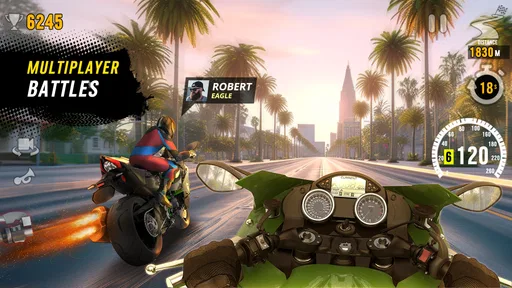
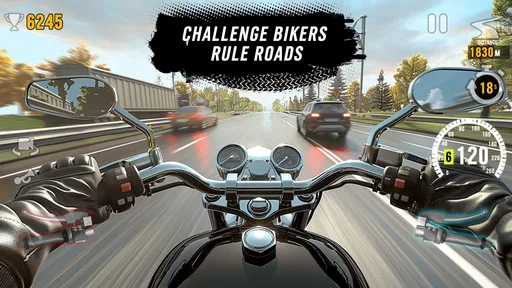
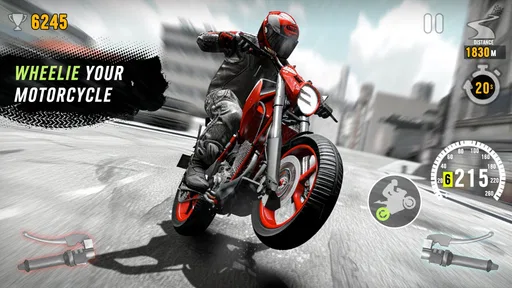
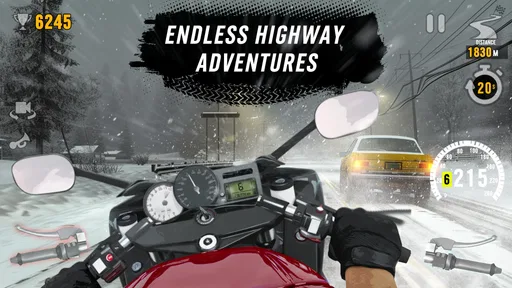
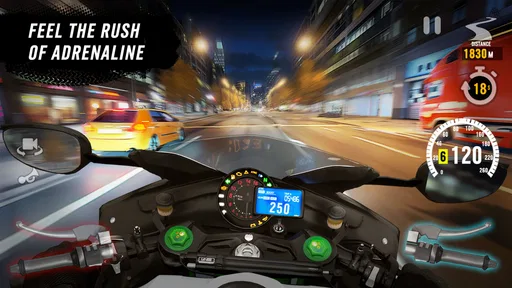
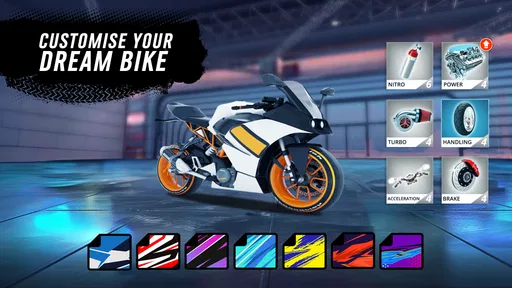
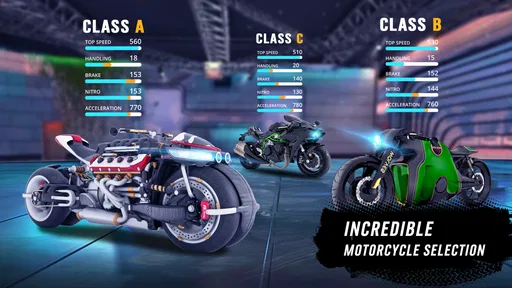
Our Review of Motor Tour: Biker's Challenge
 Analysis by Appyee
Motor Tour: Biker's Challenge is the kind of racing game I open when I want quick movement rather than a long, carefully planned simulation. It puts me on a motorcycle, sends me into traffic-filled highway runs, and asks me to react quickly while building enough control to survive longer rides. My first impression was that it is easy to understand but not automatically easy to master. The basic idea is familiar, yet the pressure comes from making small decisions at speed.
As a free racing game from Wolves Interactive ™️, it aims at players who enjoy short sessions, career progression, and competition against other riders. The store page also highlights real-time PvP, so this is not limited to racing against computer-controlled opponents. I found that mix useful because it gives the game two different moods: a relaxed attempt to improve a run and a more competitive reason to return when I want a direct challenge.
The game has reached over 10 million installs and carries an average rating of 3.6 from around 36 thousand ratings. That tells me it has broad appeal, although the rating also suggests that the experience will not suit everyone. I would not approach it expecting a deep motorcycle simulator. I would approach it as an accessible mobile racer built around speed, traffic awareness, and repeated attempts.
Getting comfortable with the ride
The first thing a new player should expect is a game that communicates through motion. You are not spending most of your time studying menus or tuning a machine in a garage. The important information arrives while riding: the position of nearby vehicles, the available gap, the direction of the road, and the moment when a risky move becomes necessary. That makes the opening minutes approachable, but it also means that careless swipes or taps can end a run quickly.
I recommend beginning with the career side rather than immediately treating PvP as the main attraction. Career-style play gives you room to learn the road rhythm without the extra pressure of facing another person. It also helps you understand how the game expects you to handle speed, lane changes, and progression. Once those actions feel natural, real-time competition becomes less confusing because you are concentrating on the opponent instead of trying to remember the controls.
There is a useful distinction between moving fast and riding well. New players often focus on maximum speed and then react too late to traffic. I had better results when I treated each stretch of highway as a sequence of decisions: choose a lane, check the space ahead, move early, and avoid making several corrections at once. That approach feels slower at first, but it produces more consistent runs and makes later attempts less frustrating.
The game is rated for Everyone, which fits its straightforward presentation and easy-to-understand premise. Still, the speed creates a level of concentration that may not be ideal for very young children without supervision. The rating describes the content, not the difficulty. A player can understand the objective immediately and still need practice before making reliable progress.
What happens after installation
Motor Tour: Biker's Challenge requires Android 7.0 or later, so anyone using an older device should check compatibility before planning around it. The current version is 2.3.1. After opening the game, I would give myself a few minutes to identify the control response before worrying about winning. The most important early question is not how quickly I can finish, but whether I can steer smoothly while watching the road.
The free download makes it easy to try without committing money at the start. There are in-app purchases ranging from $0.99 to $49.99 per item, so I would be careful around purchase prompts, particularly if a younger player will use the device. My advice is to play enough of the opening progression to decide whether the core riding feels satisfying before buying anything. A purchase cannot fix controls that do not feel comfortable in your hands.
One practical setup choice is to play in a position that keeps your thumbs relaxed and your view unobstructed. This sounds minor, but racing games punish awkward grip changes. If I hold the phone too tightly, I tend to overcorrect. A stable grip lets me make smaller movements, which matters more than dramatic reactions when traffic appears close ahead.
I also suggest starting with short sessions. The game is well suited to a spare moment, but repeated failures can make a player rush. Taking a brief pause after an unsuccessful run helps separate a genuine control problem from a simple mistake. That is especially useful during the first career attempts, when the temptation is to repeat the same risky maneuver immediately.
Your first meaningful success
For a first-time player, a meaningful success is not necessarily finishing the most difficult available race. It is completing a run while making deliberate lane changes instead of panicking. I would set that as the initial goal: stay alive, read the traffic, and finish with a feeling that the result came from control rather than luck.
A reliable routine is to look farther ahead than the motorcycle itself. The nearest vehicle is often not the real problem; the real problem is the line of traffic beyond it. If I only react to the closest obstacle, I may move into a lane that immediately becomes blocked. Watching the next opening before changing position gives me more options and reduces sudden zigzags.
Another useful habit is to avoid treating every gap as an invitation. A narrow opening may look attractive because it offers a quick route forward, but entering it can leave no room to correct. When I choose a slightly wider gap, I lose a little immediate progress but gain a better chance of keeping the run alive. In a game based on repeated highway movement, survival is often the more valuable form of speed.
Once you can complete a few runs with controlled movement, try to improve one behavior at a time. Work on smoother lane changes in one session, then focus on maintaining awareness near clusters of vehicles. Trying to become faster, more aggressive, and more accurate simultaneously makes it difficult to understand why a run failed. Small targets make the progression feel clearer.
This is also where the difference between career play and PvP becomes important. A successful career run teaches consistency. A successful PvP session requires consistency plus the ability to manage pressure when another rider is competing in real time. I would not judge the game’s competitive side after a single early loss. First build a repeatable riding habit, then use PvP to test whether you can keep it when the stakes feel higher.
Confusion that can slow new players down
The biggest source of confusion is assuming that a simple premise means every race will be simple. The controls may be easy to grasp, but traffic creates a moving puzzle. A player who expects to hold a line and react only at the last second will probably crash more often than someone who plans a route through the traffic.
It is also easy to mistake a fast run for a good run. Speed feels rewarding, especially when the road opens, but a reckless approach can erase progress quickly. I found the game more enjoyable after I stopped measuring every attempt only by how aggressively I rode. A clean sequence of decisions is a better sign of improvement than one spectacular near-miss.
Players may also wonder whether the game is mainly for solo users or competitive players. In my view, it works best when treated as both, but not necessarily at the same time. The career modes are the better starting point for learning and for casual play. Real-time PvP is more appealing once you want pressure and comparison. If you dislike competition against other players, the solo side is still the sensible place to spend your time.
Another point worth understanding is the difference between a motorcycle racing game and a full simulation. Motor Tour: Biker's Challenge is not the choice I would make for detailed mechanical realism, extensive technical adjustments, or a slow recreation of professional racing. Its appeal is immediate movement on highways. If you want a game that begins quickly and rewards visual reaction, that focus is a strength. If you want to study braking points and vehicle behavior in a highly realistic environment, a dedicated simulator would be a better match.
The average rating of 3.6 also encourages realistic expectations. I would not interpret it as a warning to avoid the game, because the large install base shows that many players have found a reason to try it. I would interpret it as a sign that the experience depends heavily on personal tolerance for repetition, traffic mistakes, and the feel of mobile controls. Players who enjoy retrying short challenges may be comfortable with it; players looking for a polished, universally smooth ride may be more critical.
How I would use it in everyday play
Imagine having ten minutes before leaving for work or while waiting for an appointment. This is where the game makes the most sense to me. I can start a run, focus on staying composed through traffic, and stop after a small improvement without needing to remember a complicated story. The same short-session design can also work after a longer day, when I want something active but do not want to learn a new system.
For a longer session, I would alternate goals rather than repeating the same race mindlessly. I might spend one attempt learning a route through traffic, another trying to maintain cleaner movement, and then switch to PvP when I feel ready for competition. This keeps the game from becoming a simple loop of rushing forward and restarting. It also makes failures more informative because each attempt has a specific purpose.
One trade-off is that the highway setting gives the game a clear identity but can also make the experience feel repetitive for players who need constant environmental variety. The focus on traffic and speed is effective, yet it does not provide the same sense of exploration as an open-world motorcycle game. I would choose this title for concentrated racing bursts, not for wandering through a large map.
The purchase system is another reason to define your limits before playing. Since the game is free and offers individual purchases from $0.99 up to $49.99, I would treat spending as optional rather than part of the first-day plan. Play the basic loop, decide whether the handling and progression hold your attention, and only then consider whether an optional item adds enough value for you. That order protects the decision from early excitement.
When another racing game is a better choice
Compared with a traditional arcade racer built around closed circuits, this game puts more attention on traffic reading and continuous highway movement. There is less emphasis on memorizing a lap and more on preserving a safe line through changing obstacles. That makes it a good alternative for someone who finds repeated track laps dull but still wants a focused racing challenge.
Compared with a motorcycle simulator, it is easier to approach and faster to understand. You do not need to be interested in real-world bike mechanics to enjoy the central action. The compromise is depth. A player who wants realistic handling, detailed machine management, or a broad collection of technical settings should look elsewhere.
Compared with a purely offline casual racer, the real-time PvP option gives Motor Tour: Biker's Challenge a stronger competitive angle. That can extend its life for players who enjoy testing themselves against others. On the other hand, anyone who wants a completely private, low-pressure experience may prefer to remain in career modes or choose a game designed solely around solo play.
My practical recommendation is simple: install it if you want free, fast motorcycle racing and you are willing to learn through repeated highway runs. Skip it if you need a story-driven adventure, extensive simulation detail, or a game that never asks for careful attention. It is also not ideal for someone who becomes annoyed by restarting after traffic mistakes, because improvement depends on accepting those failures as part of the loop.
What to do after the first few runs
After your first successful career attempt, do not immediately chase the most aggressive route. Repeat the basic pattern until you can make lane changes without hesitation. Then begin experimenting with earlier decisions: move before the traffic closes a gap, leave yourself a recovery lane, and avoid entering spaces that require an instant second correction. These are small adjustments, but they turn the game from reaction alone into preparation.
When you feel consistent, try real-time PvP with a modest goal. Instead of demanding a win, focus on keeping your normal riding habits while another player is present. If you start making rushed movements, return to career play for a few minutes and rebuild your rhythm. This alternating workflow is more useful than forcing competitive matches before your controls feel automatic.
I would also keep an eye on how much the game’s repetition affects your enjoyment. If each run gives you a clear lesson, the loop can remain satisfying. If you are repeating attempts without changing your approach, take a break or switch modes. The game rewards attention more than sheer persistence, and a short pause can prevent the experience from turning into frustration.
Motor Tour: Biker's Challenge is a focused mobile racing game with a clear entry point and enough variety between career play and PvP to support different moods. Wolves Interactive ™️ has built the experience around quick highway decisions rather than elaborate simulation. In my experience, its strongest quality is how quickly a new player can understand the objective and begin working toward cleaner rides.
My recommendation is to treat control and awareness as the real progression system. Start slowly, learn to read traffic beyond the nearest vehicle, and judge success by consistency before speed. With that mindset, the free game is easy to try and can provide satisfying short sessions. Without it, the same traffic-focused design may feel repetitive or unforgiving. For me, it is worth a download for casual motorcycle racing, provided I approach it as a skill-building arcade ride rather than a complete racing simulation.
Verdict
Strengths of Motor Tour: Biker's Challenge
- Simple controls make it easy to start riding quickly.
- Short races are convenient for quick gaming sessions.
- Bike upgrades add a sense of progression.
- Colorful tracks and environments keep races visually engaging.
- Works well for players who enjoy casual motorcycle challenges.
Limitations of Motor Tour: Biker's Challenge
- Some levels can feel repetitive after extended play.
- Progress may depend heavily on repeated upgrades.
- Traffic and obstacles can sometimes feel unpredictable.
- The game may offer limited depth for experienced racing fans.
- Ads or in-app purchases may interrupt the overall experience.
Other Releases by Wolves Interactive ™️
View All
Racing Go: Speed Thrills
Racing3.8
Similar Picks in This Category
View All
Hill Climb Racing
Fingersoft4.3

Dr. Driving
SUD Inc.4.2

Traffic Rider
skgames4.5

Asphalt 8 - Car Racing Game
Gameloft SE4.6

Race Master 3D: Car Racing
Beresnev Games4.6

Extreme Car Driving Simulator
AxesInMotion Racing4.3
Frequently Asked Questions
What is Motor Tour: Biker's Challenge?
Motor Tour: Biker’s Challenge is a motorcycle racing game focused on fast road rides, traffic-filled routes, and challenging missions. Players control a biker, avoid vehicles, overtake traffic, and try to complete objectives while maintaining speed. The game is designed for short, action-packed sessions and combines arcade-style controls with bike customization and progressive challenges.
How is the gameplay and control system?
The game uses relatively simple controls, making it accessible even if you are not familiar with motorcycle racing titles. Depending on the version and selected settings, you guide the bike by steering, tapping, or swiping while managing acceleration and avoiding collisions. The controls are easy to learn, but later challenges require quick reactions and careful positioning in traffic.
Can motorcycles be upgraded or customized?
Yes, progression generally includes opportunities to improve your motorcycle and make it more competitive. Depending on the available game modes, you may be able to unlock different bikes or upgrade performance areas such as speed, handling, braking, and acceleration. These improvements are useful when traffic becomes denser and missions demand more precise, faster riding.
Does Motor Tour: Biker’s Challenge require an internet connection?
The basic riding experience may be playable offline, which is convenient for users who want a quick game while traveling or without mobile data. However, some features can depend on an internet connection, including advertisements, online events, cloud-related services, updates, or leaderboard functions. It is best to check the store listing and test the game after installation.
Is Motor Tour: Biker’s Challenge free to download and suitable for all players?
The game is generally offered as a free download, but it may include advertising, optional in-app purchases, or both. These purchases can help unlock content or speed up progression, although patient players may still enjoy the core experience without spending money. Because the game emphasizes traffic avoidance and quick reflexes, it is best suited to players who enjoy casual arcade racing.
Play our best games!


